
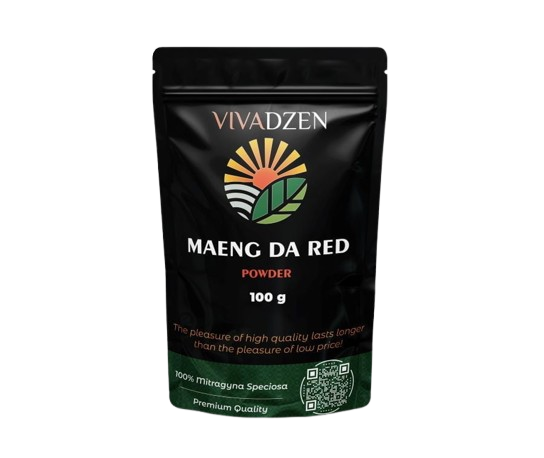
BY VEIN COLOUR · RED
Red kratom
The most mature leaf and the longest processing of all the colours: long drying, sometimes a short fermentation. In the catalogue red is a single product - Red Maeng Da from Borneo, with a VŠCHT Prague protocol for every batch.
- Mature leaf The vein has reddened, a late harvest
- The longest processing Long drying or a short fermentation
- Red Maeng Da The only red item, from Borneo
About red kratom
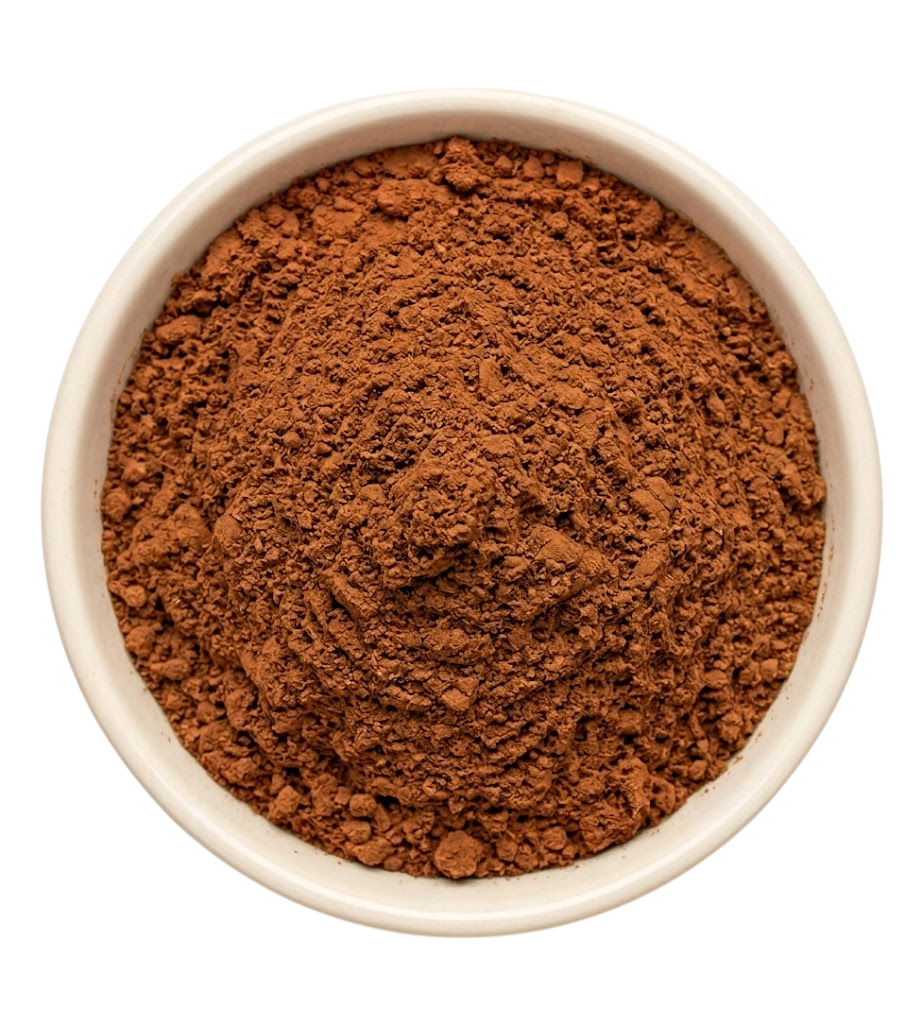
Red kratom (red vein) is the leaf of Mitragyna speciosa harvested only at maturity, once its central vein has turned red. It goes through the longest processing of all the colours - long drying, often in the sun, or a short fermentation in sacks - so the finished powder is darker, with a red-brown shade. The shade comes from leaf maturity and the length of processing, not from a different tree or a different strain.
A red vein is the end of the colour sequence the vein runs through as the leaf matures: from light through green to red. It marks the latest stage at which the leaf is still harvested.
In the catalogue red has one representative - Red Maeng Da from Borneo, a finely ground powder from selected mature leaf. It has its own batch and its own VŠCHT Prague protocol; the current values are in the table below and on the product page.
- Leaf vein
- red, harvested at maturity
- Processing
- the longest of all colours: long drying or a short fermentation
- Available strain
- Maeng Da (Borneo)
- Form
- finely ground powder, approx. 80 mesh
- Other spellings
- red kratom, red vein
- Packaging
- 25 g / 50 g
Products
RED AMONG THE COLOURS
One plant, four colours
The difference is leaf maturity and the length of processing.
Every colour comes from the same leaf; what tells them apart is the maturity at harvest and the drying method. Red is the most mature leaf with the longest processing; green comes from medium-maturity leaf with ordinary drying, white from younger leaf dried without direct sun, and yellow from a special drying regime. The mitragynine ranges in the protocols overlap across the colours, so colour tells you about processing, not strength - the specific batch decides. A full comparison of the colours is in Kratom vein colours, and the current numbers are in the table below.
| Vein colour | Strains | Forms | Mitragynine (COA) | Grind | In stock |
|---|---|---|---|---|---|
| Green | Maeng Da, Sumatra, Thai, Rurut | Powder, Nano, Extract | 1,28 - 1,46 % extract 12 % | finely ground, nano (≤ 50 μm), water extract | 5 products |
| White | Maeng Da, Elephant | Powder | 1,49 - 1,55 % | finely ground | 2 products |
| Red you are here | Maeng Da | Powder | 1,42 % | finely ground | 1 product |
| Yellow | - | - | - | - | Coming soon |
Mitragynin values are ranges from the COA of current batches (VŠCHT Praha) and change with every batch. You'll find exact values with each product.
RED VEIN · IN DETAIL
Red kratom: the plant, processing, composition and buying
What the plant is and why the vein turns red
Mitragyna speciosa is an evergreen tropical tree of the coffee family (Rubiaceae), a botanical relative of coffee; in the wild it grows up to 25 m in the humid equatorial forests and river lowlands of Southeast Asia (where kratom grows). The central vein of its leaf changes colour with age - from light through green to red. A red vein therefore means not a different species or tree but the most mature leaf: the same tree at different stages provides leaf for the white, green and red variants (the plant's life cycle, vein colours). The red leaf for our Maeng Da comes from Borneo (Kalimantan), the main producer today (Indonesia as a supplier).
The longest processing: drying and a short fermentation
After harvest and stem removal, the mature leaf is processed for longer than in any other colour: dried in the sun or for longer indoors, or left to ferment briefly in sacks before final drying, where controlled moisture and warmth deepen the dark shade. It is the length and intensity of this step that set red apart from green and white - the process is described in detail in Kratom leaf fermentation. The dried leaf is then milled to a fine powder of around 80 mesh (about the grind); the grind changes how the powder behaves in water, not its composition.
Alkaloids and what the lab measures
The kratom leaf holds more than forty alkaloids; the main one is mitragynine, alongside smaller amounts of 7-hydroxymitragynine, speciogynine and paynantheine. How much a given batch holds is set not by the colour or the processing but by the batch itself: the accredited VŠCHT Prague laboratory measures mitragynine and 7-hydroxymitragynine by HPLC, plus purity and heavy metals (how to read a COA). A batch without a protocol is not put on sale.
Fermented leaf and microbiology in the COA
For red, one part of the protocol carries extra weight - microbiology. Fermentation and longer drying work with moisture, and moisture favours microorganisms, so for a red batch the laboratory verifies total microbial counts, yeasts, moulds and pathogens by culture as strictly as alkaloid content. A batch goes on sale only once it passes these limits and the heavy-metal limits. All protocols are on the Laboratory tests page.
Red Maeng Da - the only red in the range
The red colour here is represented by Red Maeng Da: selected mature leaf of the Maeng Da strain from Borneo, finely ground. The same strain is also in the green and white variants, but each colour is a separate batch with its own protocol, so values do not carry over between them. You choose by the protocol of the specific batch, not by the shade; any extension of the red line depends on the availability of batches with a protocol.
"Red for the evening"? What the law says
Foreign websites traditionally attribute calming and evening use to red. But the Czech psychomodulatory substances act forbids such promises on products, and our tests do not support them: the alkaloid ranges of red, green and white batches overlap, so an effect cannot be inferred from the colour. The only wording about action we may give is the mandatory information on the packaging, shared by all colours. What the law and science say about effects is summarised in Kratom effects: what we may say.
Instructions, storage and buying
The instructions for use are shared by all colours: 3 g per serving, no more than 10 g per day, a 3-day break between uses, always weigh the dose (dosing by the instructions); the risks are summarised in Risks and safety. Store the darker red powder like any other - in a sealed pouch, dry and dark (storing kratom). 25 g or 50 g packs with mandatory labelling; sold only to persons over 18 after age verification, at our two Prague stores or in the e-shop with delivery across the Czech Republic (delivery and payment).
Other colours and the Maeng Da strain
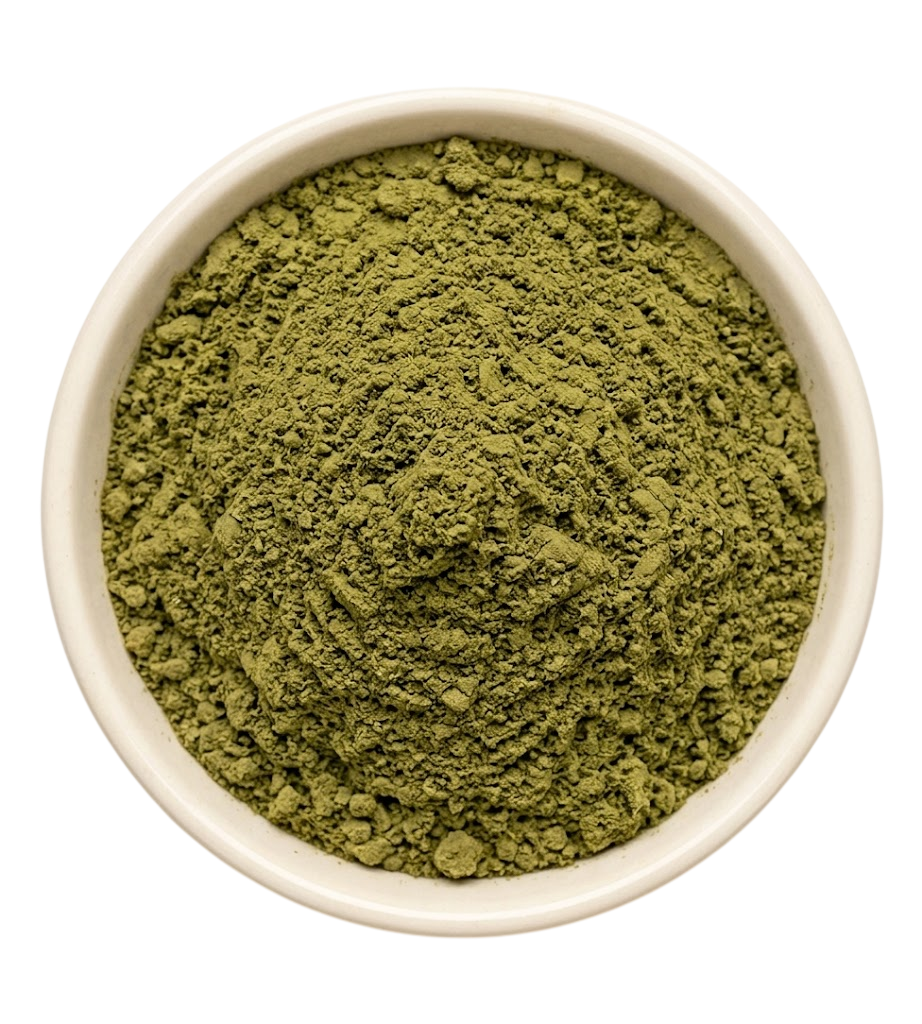
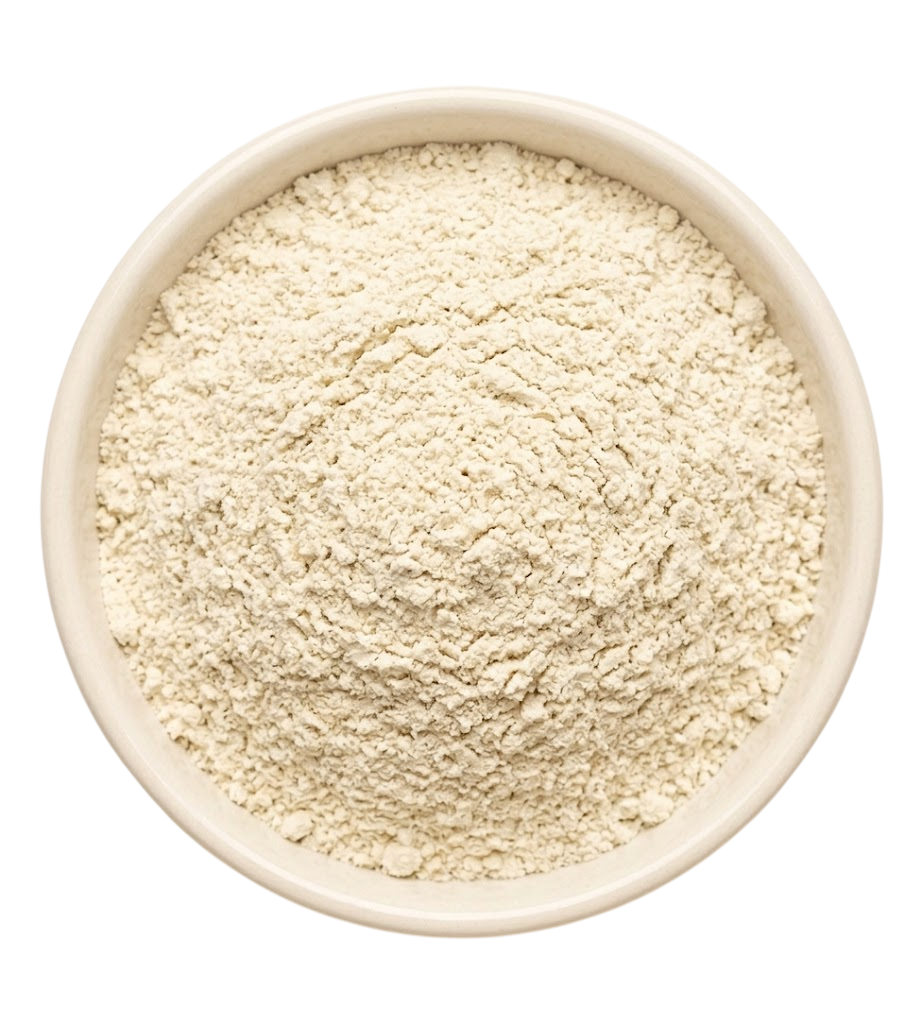
Vein colours in this range: Green, White.
Other strains: Maeng Da, Sumatra, Thai, Elephant, Rurut.
Available forms: Powder.
Warning: This product is not a food. Not intended for persons under 18. Use according to the instructions. Do not exceed the recommended daily dose.
LAB TESTS
The current batch in the lab
Drying and fermentation are a process - what is in the powder is shown only by the protocol from the accredited VŠCHT Prague laboratory:
| Product | Batch | Mitragynine | 7-OH | Purity | Test date |
|---|---|---|---|---|---|
| Červená Maeng Da Powder | VD-2026-014 | 1,42 % | 0,008 % | 99,1 % | 12. 03. 2026 |
Browse by
BY STRAIN
By strain
6 strains by origin and leaf selection


FREQUENTLY ASKED QUESTIONS
Common questions
Short answers to what people most often ask about the red vein.
Is red kratom a different strain or a different plant?
Neither. It is the leaf of the same Mitragyna speciosa tree, harvested later, once the central vein has turned red. The strain is stated separately - here Maeng Da, which also comes in green and white variants.
Is red "for sleep" or "for the evening"?
Such promises are prohibited by the psychomodulatory substances act, and the tests do not support them - the alkaloid ranges of the colours overlap. The only permitted wording about action is the mandatory information on the packaging, the same for all colours (what we may say about effects).
Is fermented leaf safe?
Yes, when the batch passes testing. Because fermentation works with moisture, the VŠCHT Prague laboratory checks microbiology on every red batch - microorganisms, yeasts, moulds, pathogens - alongside heavy metals. Only a batch that passes the limits goes on sale.
Why do you have only one red item?
We only list batches for which we hold a protocol from an accredited laboratory. In red, a single batch currently meets that - Red Maeng Da from Borneo; any extension will appear in the catalogue.
How is the powder dosed and stored?
3 g per serving, no more than 10 g per day, a 3-day break between uses, always weigh the dose (dosing by the instructions). Store in a sealed pouch, in a dry, dark place, out of reach of persons under 18; the batch expiry date is on the packaging.


