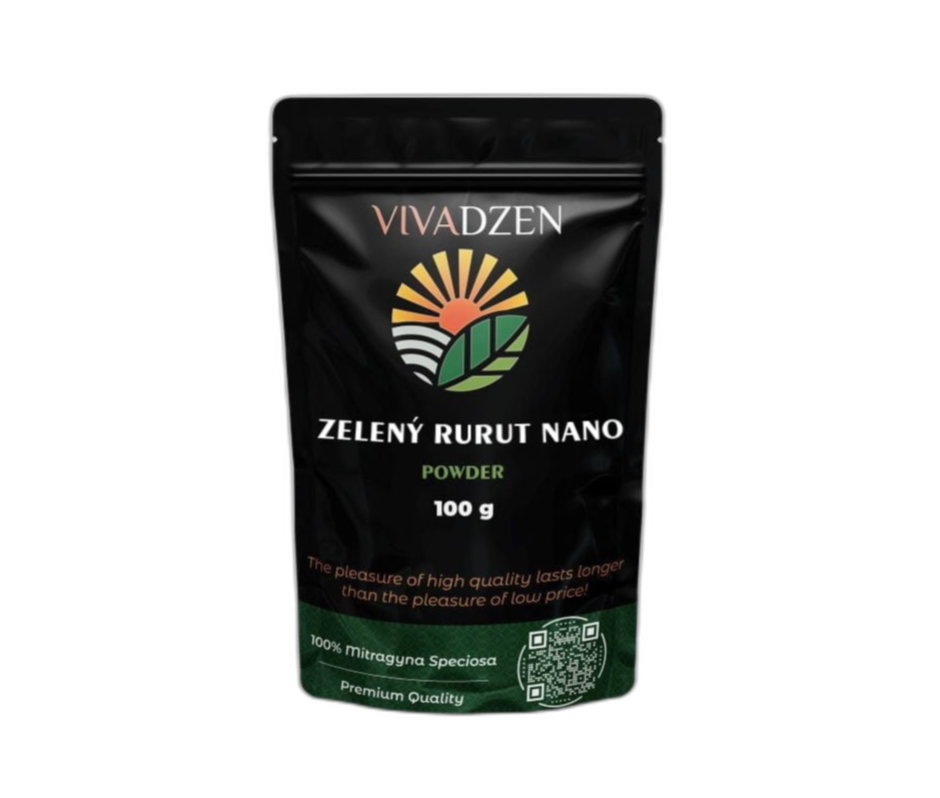
Nano
FORM · NANO
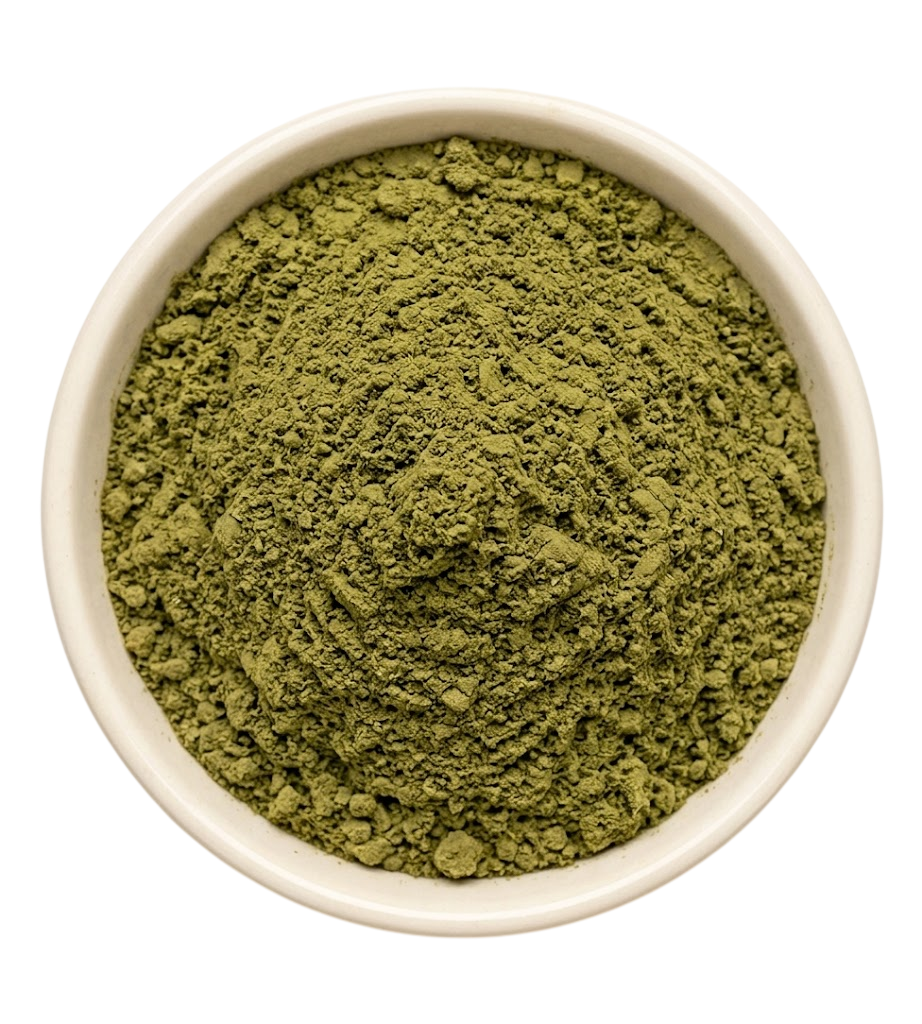
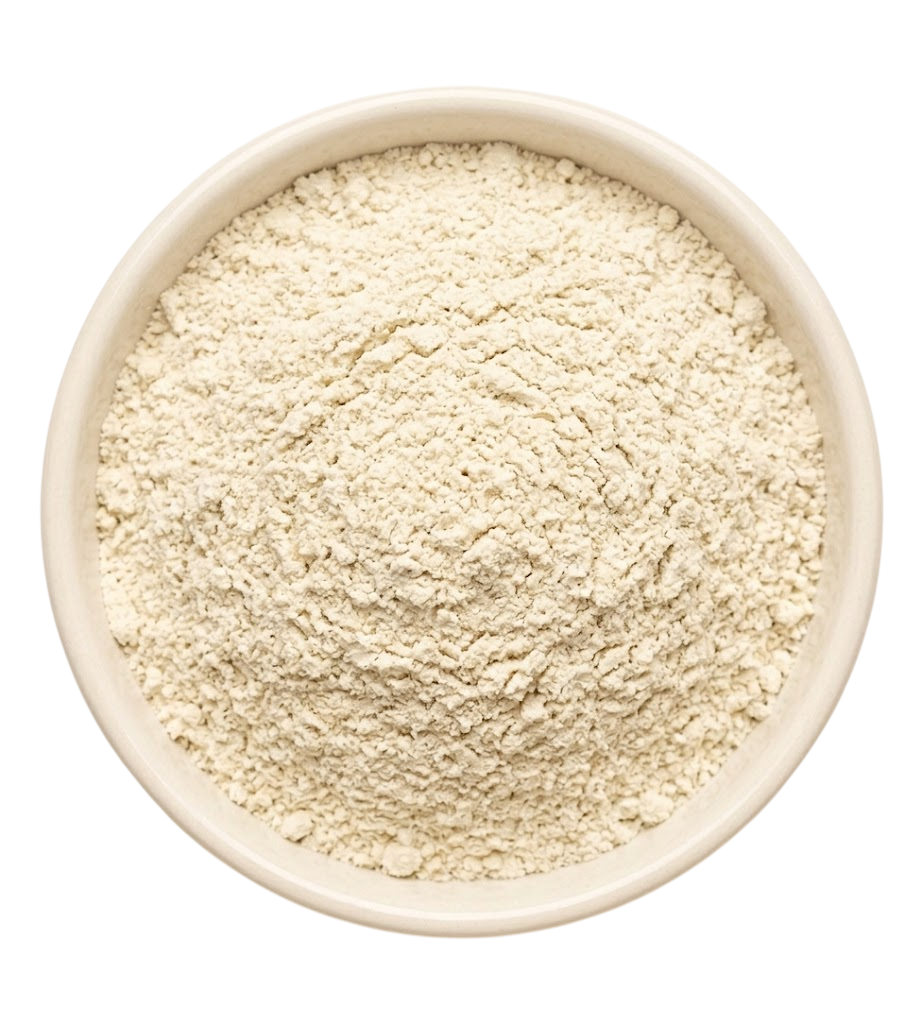
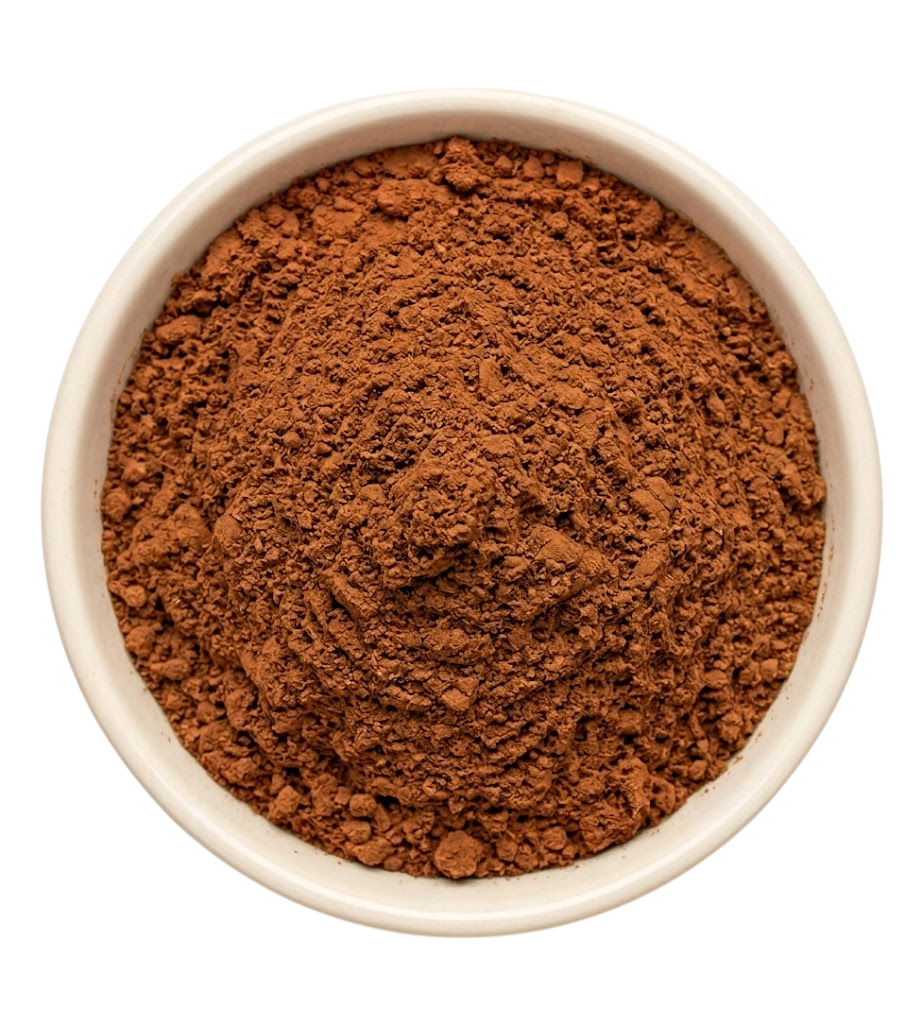
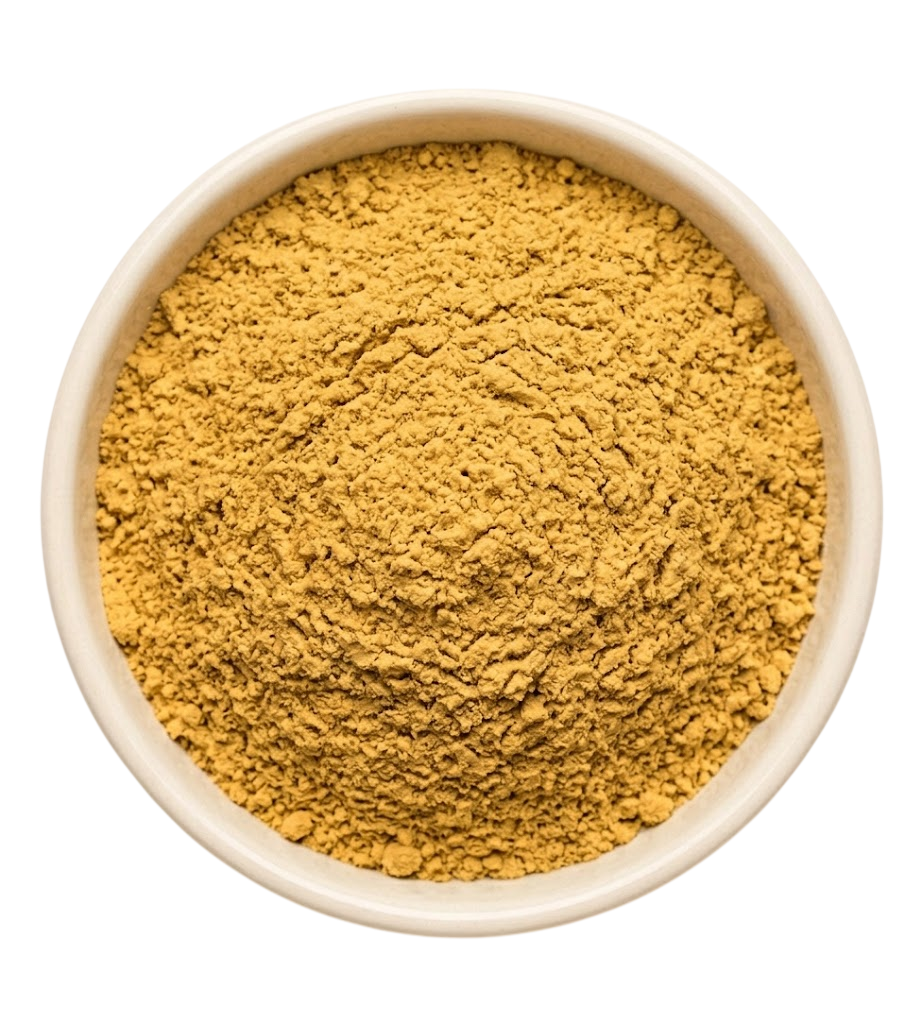
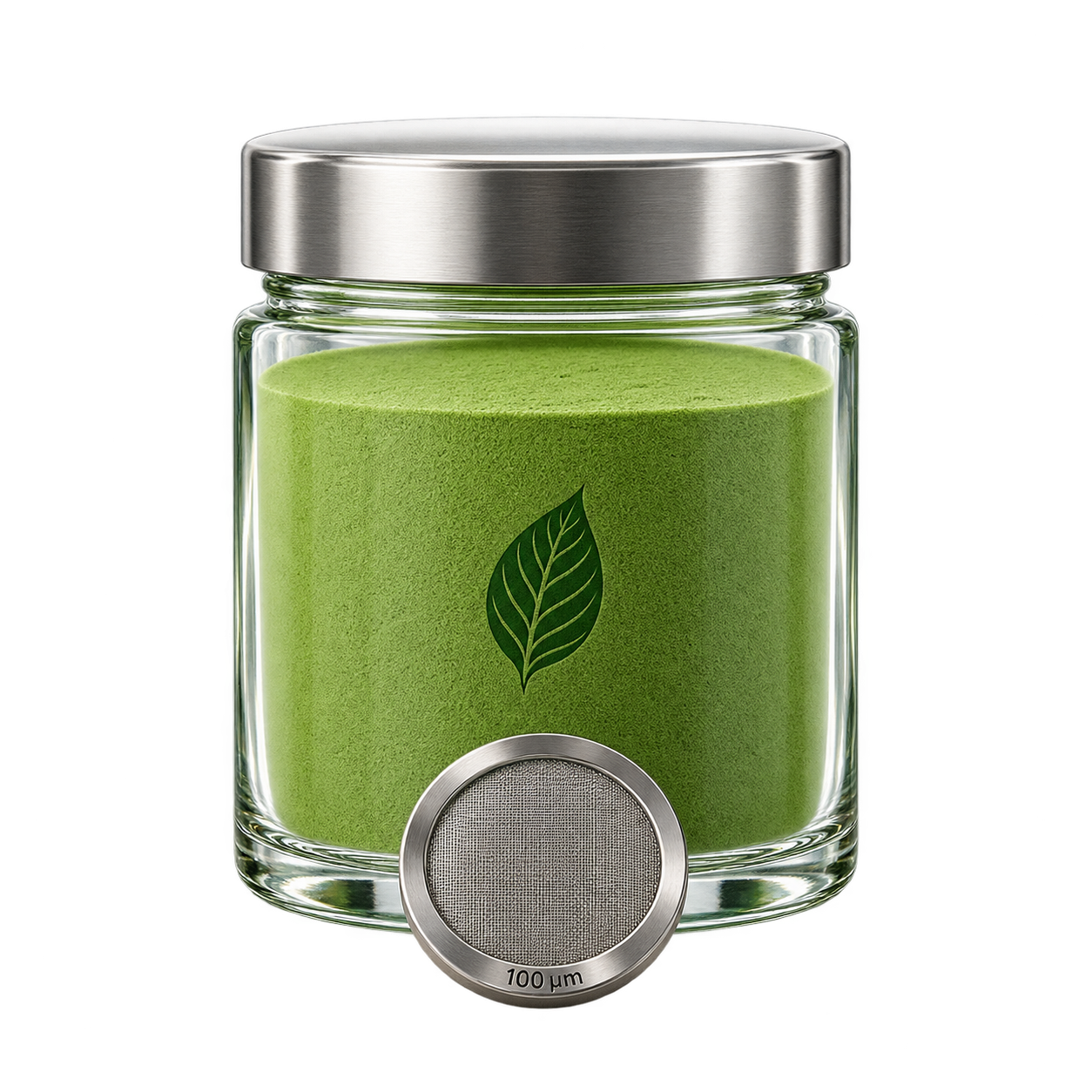
Dried Mitragyna speciosa leaf after a second, finer milling to a fraction of ≤ 50 μm - finer than an ordinary powder at around 80 mesh. Nano is a grind, not a strength; alkaloid content is set by the batch and its protocol, not by the mill.
Nano is a form in which we sell the leaf, or more precisely a grind. It is the same dried leaf of Mitragyna speciosa, a tropical tree of the coffee family (Rubiaceae) and a botanical relative of coffee, as in an ordinary powder; it just goes through a second, finer milling to a fraction of ≤ 50 μm. It is not a strain, a colour or a strength tier - only a finer granulometry of the same leaf.
So far we carry it in a single product: green-processed Rurut from Borneo, that is the green colour and one strain - both of which are described on their own pages and given here as a link. What the finer grind shows and what it does not is covered in the text below; how much of each a batch holds you always read in its protocol.
FORMS IN NUMBERS
Three forms of the same leaf. A comparison by grind, behaviour in water, instructions and report values.
All three forms are the same Mitragyna speciosa leaf, differing in processing and physics, not in strength. Ordinary powder is dried leaf ground to a fraction of around 80 mesh. Nano is the same leaf after a second milling to particles of ≤ 50 μm: it wets faster, disperses more evenly and, at the same weight, fills a different volume on the spoon - but the alkaloid content does not change with it. Extract is a water concentrate with an order-of-magnitude higher mitragynine content, and so has its own instructions in drops. The instructions in grams apply to ordinary powder and nano alike; doses are not converted between forms. How much of each a product holds is set by the batch and its COA, not by the form.
| Form | Strains | Vein colours | Pack sizes | Mitragynine (COA) | In stock |
|---|---|---|---|---|---|
| Powder | Maeng Da, Sumatra, Thai, Elephant | Red Green White | 25 g / 50 g | 1,28 - 1,55 % | 6 products |
| Extract | Maeng Da | Green | 10 ml | 12 % | 1 product |
| Nano you are here | Rurut | Green | 25 g / 50 g | 1,46 % | 1 product |
Mitragynin values are ranges from the COA of current batches (VŠCHT Praha) and change with every batch. You'll find exact values with each product.
LAB TESTS
The grind does not change alkaloid content - only the batch protocol shows it. Values for the single nano product from VŠCHT Prague:
| Product | Batch | Mitragynine | 7-OH | Purity | Test date |
|---|---|---|---|---|---|
| Zelený Rurut Nano Nano | VD-2026-013 | 1,46 % | 0,008 % | 99,3 % | 08. 03. 2026 |
NANO · GRIND, COMPOSITION, BATCH
We mill ordinary kratom powder to a fraction of around 80 mesh - particles up to roughly 180 μm. Nano goes one step further: after the first milling comes a second, finer one that brings the particles below 50 μm. "Nano" here is therefore a label for the grind, not a size in nanometres and not a strain. What mesh and micrometres actually mean and how the fraction is measured is covered in the guide kratom powder granulometry.
Smaller particles have a larger total surface, so nano powder wets faster, mixes in more evenly and stays suspended longer than a coarser grind. It is also lighter by volume: at the same weighed amount it fills a different volume on the spoon, so a guess by eye is even less reliable with nano, and the only dependable measure remains a scale. What the grind does not change is alkaloid content - the mill adds and removes nothing; the values are set by the leaf and you read them in the batch protocol. A finer grind therefore does not mean a stronger product; claims about effects are not permitted by law, and the only text about action is the mandatory information on the packaging.
The leaf comes from Mitragyna speciosa, an evergreen tree of the coffee family (Rubiaceae) and a botanical relative of coffee. It holds more than forty alkaloids: mitragynine dominates, with smaller amounts of 7-hydroxymitragynine, speciogynine and paynantheine - and how much of them a batch holds differs from batch to batch, independently of the grind. That is why the product has its own certificate of analysis (COA) from VŠCHT Prague, which measures mitragynine and 7-hydroxymitragynine by HPLC, along with purity, microbiology and heavy metals. An overview of batches is on the Laboratory tests page.
Nano is a form, not a strain, so in principle it can appear with different leaves; in our range it is so far carried by a single product - Green Rurut Nano, green-processed leaf of the Rurut strain from Borneo. What the name Rurut means and what marks out green processing are described on their own pages. Whether another colour or strain joins nano depends on the availability of a batch with a laboratory protocol; the current state is shown by the catalogue above.
A finer fraction has a larger surface, so it takes on moisture and odours faster than a regular grind; in light and air the leaf also oxidises and darkens. Store nano therefore in the carefully closed original pouch, in a dry, dark place at room temperature, out of reach of persons under 18, and do not leave the pouch open needlessly. The shelf life of the batch is on the pack; how long the powder keeps and how to tell it is no longer good is covered in storing kratom powder.
Nano kratom, like ordinary powder, is a psychomodulatory substance under Act No. 167/1998 Coll.: it may be sold only by a holder of a Ministry of Health licence and exclusively to persons over 18 after age verification. We pack it in 25 g and 50 g resealable pouches with the mandatory labelling, a batch number and instructions for use. You can buy at our two shops in Prague or in the e-shop with delivery across the Czech Republic (delivery and payment). What we may and may not say about effects is summarised in Kratom effects: what we may say.
Available forms: Powder, Extract.
Vein colours in this range: Green.
Other strains: Maeng Da, Sumatra, Thai, Elephant, Rurut.
Warning: This product is not a food. Not intended for persons under 18. Use according to the instructions. Do not exceed the recommended daily dose.
BY VEIN COLOUR
4 categories by vein colour and leaf processing
BY STRAIN
6 strains by origin and leaf selection
FREQUENTLY ASKED QUESTIONS
What nano is, how it differs from an ordinary powder, how to measure it and store it.
Nano is a grind, not a strain or a strength tier: the same dried Mitragyna speciosa leaf as an ordinary powder, but after a second, finer milling to a fraction of ≤ 50 μm. So far we carry it in a single product, Green Rurut Nano.
Only in the finer grind and what follows from it: it wets faster, disperses more evenly and, at the same weight, fills a different volume on the spoon. It is the same leaf with the same instructions in grams; the regular grind of around 80 mesh we carry in the other powders, with an overview on the kratom powder page.
No. Strength here means the alkaloid content of a specific batch, and the grind does not change it - the mill adds and removes nothing. The batch values are in the table above; claims about effects are prohibited by law, and the only permitted text about action is the mandatory information on the packaging.
The instructions are the same as for an ordinary powder: 3 g per serving, no more than 10 g per day, a 3-day break between uses. Because nano is lighter by volume, a guess by spoon misleads even more, so always weigh the dose on a scale with a 0.1 g step (dosing by the instructions).
In the carefully closed original pouch, in a dry, dark place at room temperature, out of reach of persons under 18. With such a fine fraction, watch moisture above all, so close the pouch tightly after every use. The batch expiry date is on the pack; more is in the article Risks and safety.
Quick overview: set up Mobile Key once and verify your age in a few seconds.


No requests yet. Write to us - we'll reply!
Your feedback has been passed to the head of customer care. Thank you - it really matters, we will draw conclusions.
Ask about a product, availability, delivery or your order - an advisor will reply right here.